


Famato System participates in the Pontes Pantaneiras Forum in Campo Grande (MS)
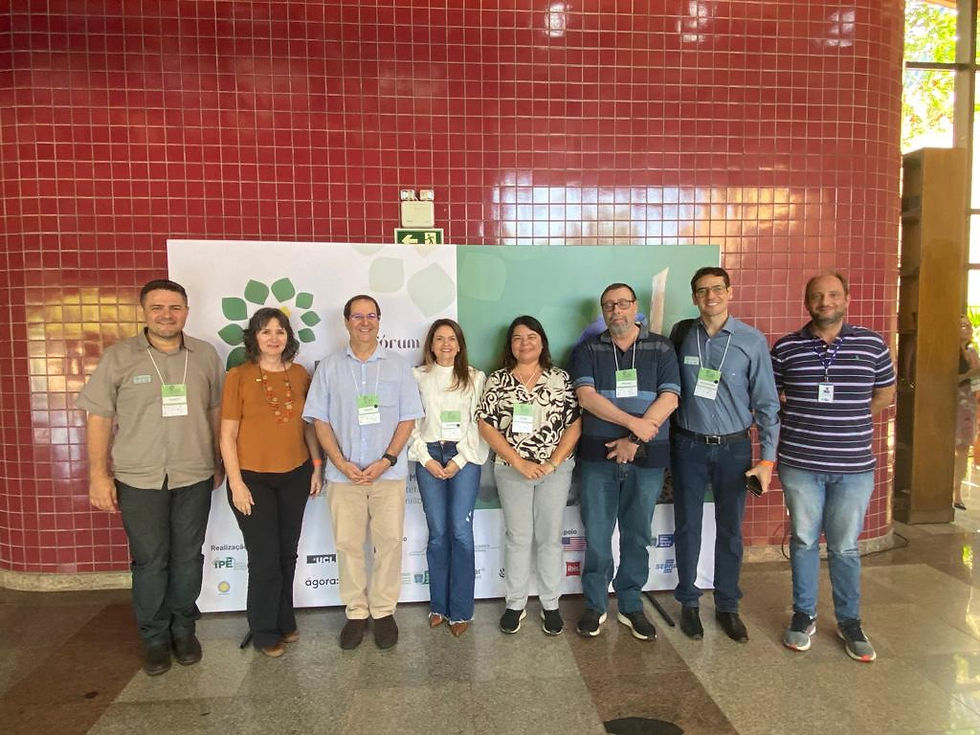
The Famato System took part in the Pontes Pantaneiras Forum: Connecting people, culture, biodiversity, and sustainability, held from August 16 to 18 in Campo Grande (MS). The event aims to promote a space for dialogue on economic development, conservation, culture, and education, highlighting successful cases of sustainable ecosystem use.
On this occasion, the Famato System was represented by Marcos Carvalho, Livestock Analyst at the Agriculture and Livestock Federation of Mato Grosso (Famato); Marcelo Nogueira, supervisor at the National Rural Learning Service (Senar-MT); and Daniela Campos Preza, director of the Rural Union of Poconé.
In his presentation, Marcos Carvalho addressed the pilot project Sustainable Pantaneira Farm (FPS). The program is coordinated by the Famato System in partnership with the Mato Grosso Breeders Association (Acrimat) and Embrapa Pantanal, and aims to support rural producers in the Pantanal biome of Mato Grosso in achieving economic development in a sustainable way.

The project began in 2018 and is currently present in five municipalities, covering 15 properties that together total 96,500 hectares and 53,300 head of cattle. Its main objectives include: promoting property regularization; increasing efficiency and profitability through financial management; improving zootechnical, productive, and sanitary indicators; enhancing the quality of life of Pantanal residents; preventing workplace accidents through training for producers and employees; promoting efficient management of native pastures; and enabling the use of cultivated/adapted pastures.
The analyst also addressed the challenges faced at the beginning of the project, the implementation stages, success stories, and pending goals, such as advancing public policies focused on the Pantanal and demonstrating the environmental services that beef cattle farming provides to the region.
“We have the know-how to provide technical assistance in the Pantanal. We have five years of experience with well-established processes. We have 60 properties interested in joining the project. What’s lacking is funding, given the challenge of delivering technical assistance across the region,” he emphasized.
Daniela Campos Preza also took the opportunity to present the “Guardians of the Pantanal” initiative, a non-profit organization linked to the Rural Union of Poconé (MT). Its goal is to give a voice to Pantanal producers, value rural activities in the region, challenge negative perceptions surrounding the sector, and promote public policies and regulatory frameworks aligned with the three pillars of sustainability.

“Guardians of the Pantanal emerged around the time of the 2020 wildfires, when we sought to give rural producers a voice and visibility on social media, also to challenge the stigma that farmers were responsible for setting fires in the Pantanal. On the contrary, we strive to show that we have been there for over 300 years, caring for this biome, and that there are people who actively preserve this territory,” Daniela emphasized.
The event was attended by rural producers, entrepreneurs, investors, artists, cultural producers, tourism professionals, scientists, representatives from state and federal public sectors, academics, educators, the press, and the general public.

